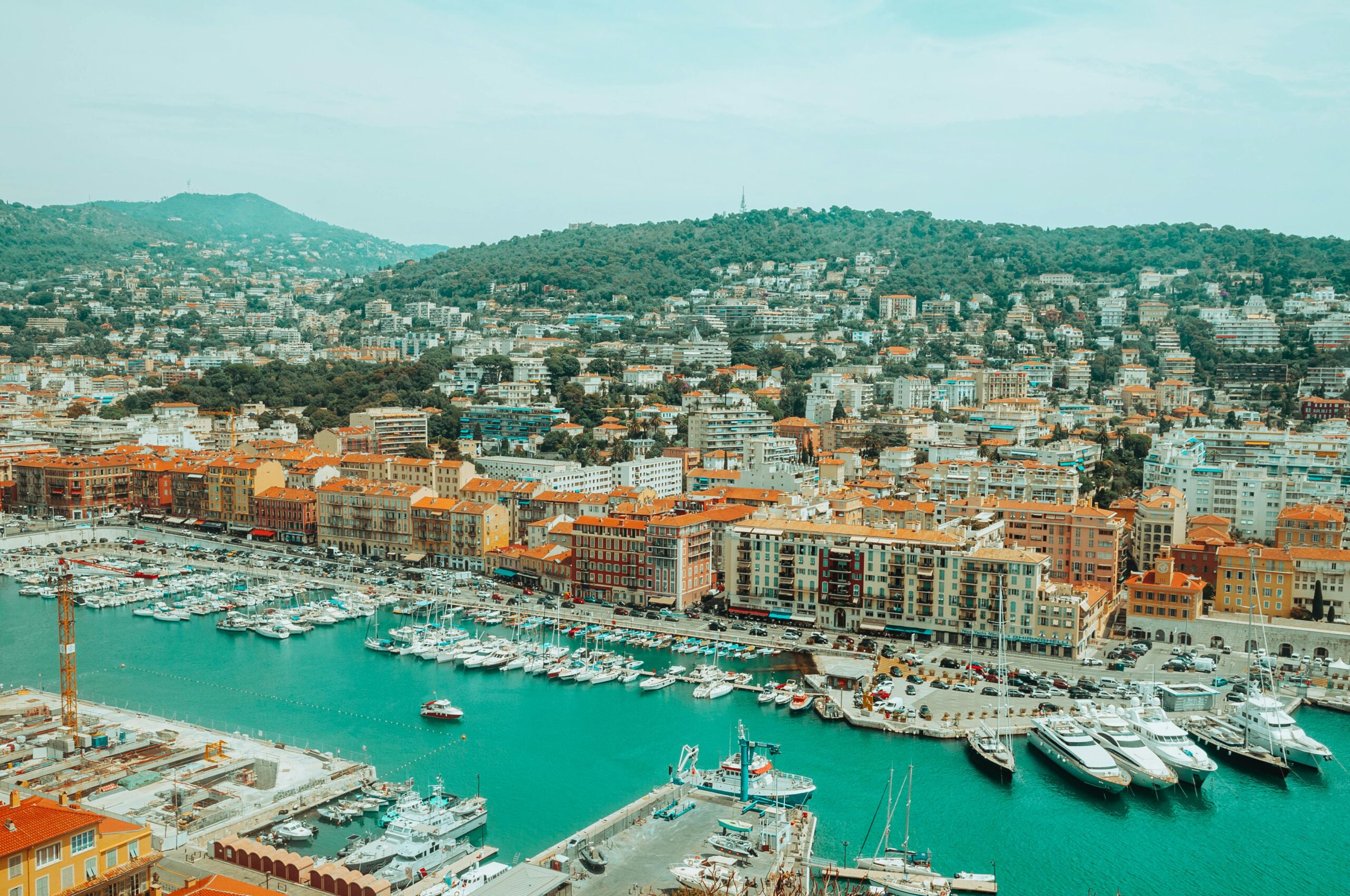
With more than 5,000 kilometres of coastline stretching from the English Channel to the Mediterranean, France is a paradise for beach lovers. Glamorous Riviera coves, wild Atlantic surf spots, sweeping Normandy sands and turquoise Corsican bays: every stretch of coast has its own character. Whether you dream of sunbathing, surfing, building sandcastles or simply watching the tide roll in, there is a French beach waiting for you.
The Riviera: Glamour, Coves and Island Escapes
The Côte d’Azur invented the modern seaside holiday, and its light still draws visitors from all over the world. Yet its beaches are more varied than their glamorous image suggests.
Pampelonne, Saint-Tropez
Around five kilometres of golden sand make Pampelonne the most famous beach on the coast. The legendary beach clubs, with their white parasols and long lunches, occupy only part of it; between them, stretches of public beach remain free, and early in the morning, the bay is almost deserted.
The Coves of the Cap d’Antibes
On the Cap d’Antibes, small beaches such as La Garoupe offer crystal-clear, sheltered water, perfect for snorkelling among the rocks. On clear days, the snow-capped Alps appear on the horizon behind the bay, a view that has seduced painters and writers for more than a century.
The Lérins Islands
Fifteen minutes by boat from Cannes, Sainte-Marguerite and Saint-Honorat feel like another world: no cars, pine forests, hidden coves and, on Saint-Honorat, a working monastery whose monks produce wine. Spending a day on the Lérins Islands, between vineyards and seaside promenades, is the perfect escape from the busy summer beaches of the mainland.
Corsica: Caribbean Colours in the Mediterranean
If you are looking for the most spectacular beaches in France, the answer lies in Corsica. The island’s southern coast, around Porto-Vecchio and Bonifacio, is lined with bays of fine white sand and water so clear that boats seem to float in mid-air.
Palombaggia is the most celebrated of them: a long crescent of sand framed by umbrella pines and red granite rocks, facing the small Cerbicale islands. It is regularly ranked among the most beautiful beaches in Europe, and in July and August it is best enjoyed early in the morning or late in the afternoon, when the day-trippers have left. Nearby, Santa Giulia offers a shallow lagoon ideal for young children.
In the north, the Agriates desert hides Saleccia and Lotu, two wild beaches with no road access at all. You reach them by boat from Saint-Florent, or on foot along a coastal path through the maquis, which gives them an unspoilt feel rare in the Mediterranean.
Corsica’s charm comes at a price, however: the island is expensive in high season and accommodation must be booked months ahead. June and September offer warm water, quieter beaches and much better value.
The Atlantic Coast: Surf, Dunes and Endless Sand
The Atlantic coast offers a completely different experience from the Mediterranean. Here, the beaches are vast, the waves are powerful and the sunsets over the ocean are spectacular.
In the far southwest, Biarritz is considered the birthplace of European surfing, since an American screenwriter brought his board there in the 1950s. Its Grande Plage, overlooked by the former imperial palace, is ideal for people-watching, while the neighbouring beaches of Anglet and Guéthary attract surfers of every level. Further north, the beaches of the Landes stretch almost without interruption for more than a hundred kilometres, backed by dunes and pine forests, and Hossegor hosts international surfing competitions every year.
Near Arcachon, the Dune du Pilat rises more than a hundred metres above the ocean, making it the highest sand dune in Europe. Climbing it is an effort, but the view over the Banc d’Arguin and Cap Ferret is unforgettable. On the sheltered side of Arcachon Bay, the water is calm and warm enough for children, and the oyster villages serve their shellfish straight from the water.
One golden rule applies all along this coast: always swim between the flags. The currents, known as « baïnes », can be dangerous even on calm-looking days, and lifeguards are there for a reason.
Brittany and Normandy: Tides, Cliffs and History
The beaches of northern France are rarely hot, but they are some of the most beautiful and most varied in the country, shaped by some of the highest tides in Europe.
In Brittany, the Pink Granite Coast around Ploumanac’h and Perros-Guirec is a landscape of extraordinary rock formations, sculpted by the wind into shapes that locals have given names to. Small sandy coves nestle between them, linked by the old customs officers’ path. Further south, La Baule’s nine-kilometre bay is a classic family resort, with gentle waves and a lively promenade. At Saint-Malo, the tide transforms the landscape twice a day: at low tide, you can walk across the sand to the island of Grand Bé, where the writer Chateaubriand is buried.
Normandy offers a more dramatic coastline. At Étretat, chalk arches and a needle of rock rise from the sea, a scene painted again and again by Claude Monet. Further west, the D-Day landing beaches of Omaha, Utah, Gold, Juno and Sword are places of remembrance as much as places to swim, and walking along them with the story of June 1944 in mind is a moving experience. For a more elegant stay, Deauville’s colourful parasols and wooden boardwalk have attracted Parisians for more than 150 years.
When and How to Enjoy French Beaches
The best beach in the world can be disappointing on the wrong day. A little planning makes all the difference.
July and August are the peak months, when French families head to the coast and the most famous beaches become crowded. June and September are often the best compromise: the water is warm, especially in September on the Mediterranean, the days are long and prices are lower. The ideal month also changes from one coast to another, and knowing the best time to visit France region by region helps you avoid both the crowds and the chilly water.
A few practical habits are also worth adopting:
- Look for supervised beaches, marked by lifeguard stations and coloured flags: green means safe, orange means caution, red means swimming is forbidden
- On the Atlantic and in the Channel, check the tide times, as the beach can disappear completely at high tide
- Many beaches are protected natural areas: stay on marked paths across the dunes and take your rubbish home
- Dogs are banned from most supervised beaches in summer, although some resorts have dedicated dog-friendly areas
From the glamour of Saint-Tropez to the wild dunes of the Landes and the pink rocks of Brittany, the beaches of France offer a wonderful variety of landscapes and experiences. Each coastline tells its own story, and each one invites you to return.
So pack your swimsuit, your sunhat and a good book, and let the French seaside work its magic. Bonnes vacances !